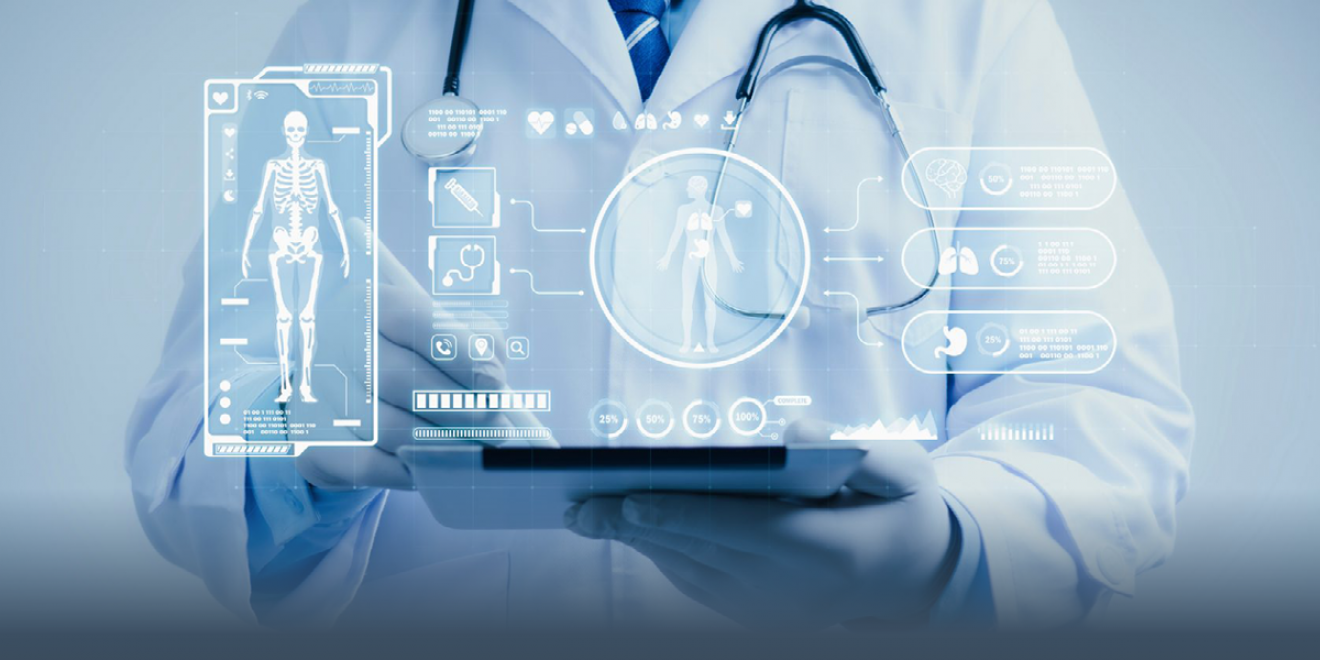
Software development is continuously driving innovation to enhance efficiency, accessibility, and the overall patient experience. These advancements, powered by revolutionary product development technologies, are reshaping the industry with a focus on delivering patient-centric solutions.
Health Information Exchange (HIE) Platforms
Health Information Exchange platforms complement Electronic Health Record (EHR) systems, ensuring the availability of critical patient information. These platforms facilitate collaborative decision-making among healthcare professionals, leading to more informed and efficient patient care. They also play a pivotal role in population health management by aggregating and analysing data from diverse sources, enabling healthcare providers to identify trends, allocate resources effectively, and implement targeted interventions.
Clinical Decision Support Systems (CDSS)
Utilising data analysis and algorithms, CDSS assists healthcare professionals in making informed clinical decisions. From diagnosis recommendations to treatment plans and medication prescriptions, these systems leverage patient data to provide comprehensive decision support. By integrating with electronic prescribing systems, CDSS helps prevent medication errors and adverse drug interactions, promoting patient safety.
Healthcare APIs
Application Programming Interfaces (APIs) play an important role in creating comprehensive and connected healthcare solutions. Enabling seamless data exchange between different healthcare systems, APIs contribute to the interoperability of various digital health tools. APIs enable the integration of third-party applications, empowering patients to actively participate in managing their health.
Mobile Applications
Mobile applications are essential tools for patients and healthcare professionals. These apps offer features such as medication reminders and fitness tracking, promoting a holistic approach to health management. Integration with wearable devices enhances the overall user experience. As mobile applications continue to evolve, many now incorporate artificial intelligence for personalised health recommendations, leveraging user data to offer tailored insights and guidance.
AI and ML Integration
The incorporation of Artificial Intelligence and Machine Learning is revolutionising diagnostics and predictive analytics in healthcare. AI algorithms analyse medical images swiftly and accurately, while predictive analytics models leverage patient data to forecast disease outcomes and optimise treatment strategies. The synergy of AI and ML is not limited to diagnostics; these technologies are increasingly employed in predictive maintenance for medical equipment, reducing downtime and optimising resource utilisation in healthcare facilities.
Blockchain Product Development Technologies
Blockchain technology addresses data security concerns by providing a tamper-proof and transparent record of patient information. This ensures data integrity and instils trust in the security of sensitive healthcare data, addressing one of the critical challenges in the digital healthcare space. The decentralised nature of blockchain also supports the creation of patient-controlled health records, giving individuals greater control over their health information and its sharing permissions.
Cloud Platforms
Cloud platforms offer scalable and secure solutions for data storage and accessibility. They empower healthcare professionals with easy access to extensive information, facilitating collaboration and data-driven decision-making in real-time. They contribute to disaster recovery and business continuity in healthcare by ensuring data redundancy and accessibility during unforeseen events.
VR and AR Technologies
Virtual Reality (VR) and Augmented Reality (AR) technologies are applied in medical training and simulation. They allow healthcare professionals to refine their skills in a realistic virtual environment, improving proficiency in complex procedures and ensuring a high standard of patient care. In addition to medical training, VR and AR technologies are being employed in patient education, allowing individuals to better understand various procedures and treatment plans.
Digital Technology Assessment Criteria (DTAC): Ensuring Confidence and Compliance
Digital Technology Assessment Criteria (DTAC) plays a key role in instilling confidence among staff, patients, and the public regarding the implementation of digital health tools. By adhering to these criteria, organisations aim to guarantee that digital product development technologies meet high standards of clinical safety, safeguard patient data, ensure technical security, and promote interoperability with existing systems.
Discover our pragmatic and competency-based approach to product development technologies.