Revolutionising Prosthetic Socket Fitting – Innovate UK project
How a publicly funded, multi-disciplinary collaboration developed AI-driven software to transform the design and fitting of prosthetic sockets—reducing patient discomfort, clinic visits, and fitting times.
The World Health Organisation estimated that around 40 million people globally were living with amputations - a figure expected to grow alongside rising life expectancies and chronic disease prevalence. Prosthetics are invaluable for independence and quality of life, yet the major challenge in the field remains the problem of ill-fitting prosthetic sockets.
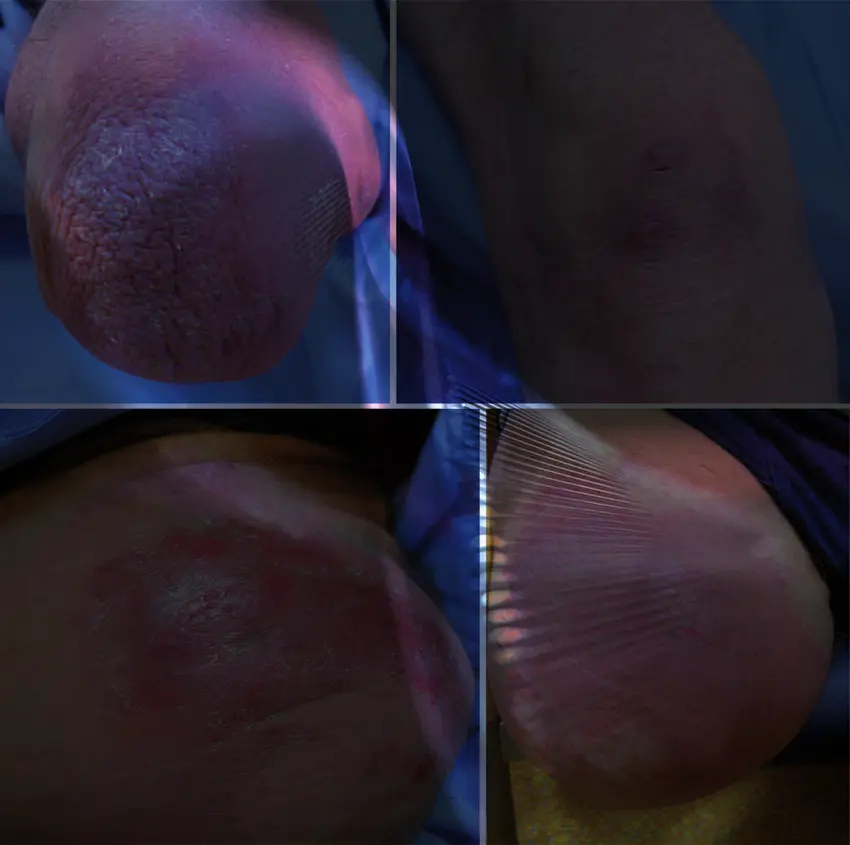
Poorly designed sockets cause weight-bearing pressure, reduced limb function, restricted blood flow, swelling, and skin lesions. Many patients reject their prosthetics entirely as a result. The fitting process itself is labour-intensive and inconvenient, requiring multiple clinic visits over weeks rather than days. There was no unified system to integrate 3D scanning, sensor-based pressure analysis, and biomechanical modelling into a single, streamlined workflow.
The solution
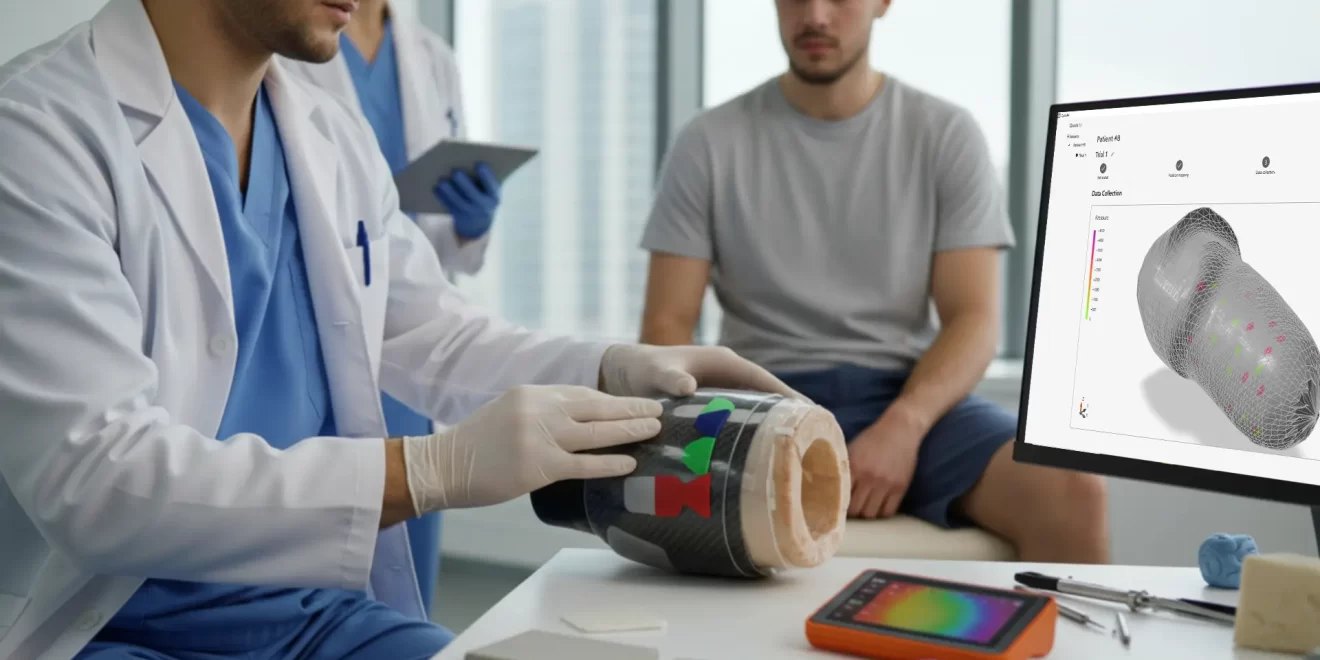
We developed a Control Software Package that integrates every component of the prosthetic socket-fitting process into a single unified platform. This was achieved through a multi-disciplinary collaboration bringing together expertise in quantum sensor technology, biomedical engineering, vascular surgery, and software development, the system combines:
3D Reconstruction
Prosthetists upload scanned 3D reconstructions of patients’ stumps in STL format for display, analysis, and processing within the software.
Quantum Sensor Integration
Cutting-edge flex PCB sensor strips placed inside 3D-printed test sockets detect pressure in real time, recording 7 strips and 20 sensels simultaneously at 10 Hz across the full gait cycle.
Biomechanical Algorithm
Sensor data is processed through a dedicated algorithm that generates an adjusted socket model optimised for the patient’s standing and walking pressure profile.
Patient Management
Comprehensive patient records including personal details, medical histories, and stump characteristics, with the ability to review and compare patient groups.
Machine Learning
The system learns from each fitting, continuously improving the accuracy and precision of generated sockets over time.
Data Export
Sensor data from test scenarios can be exported for statistical analysis, supporting ongoing research and quality improvement in the prosthetics field.
The benefits
Better-Fitting Sockets
Real-time pressure mapping across the full gait cycle ensures sockets are optimised for both standing and walking, dramatically reducing skin lesions and discomfort.
Faster Fitting Process
Integrating scanning, sensor analysis, and socket generation into one workflow reduces fitting from weeks of clinic visits to a streamlined, data-driven process.
Reduced Prosthetic Rejection
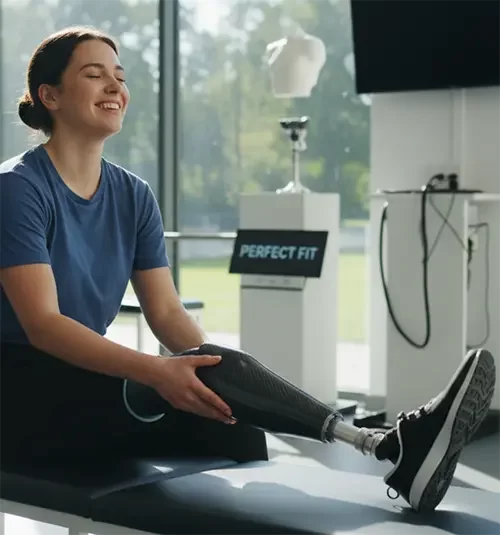
Accurately fitted sockets improve comfort, function, and control—addressing the primary reasons patients reject their prosthetics.
Continuous Improvement
Built-in machine learning means the system becomes more accurate with every fitting, growing in value over time for prosthetists and patients alike.
Research-Ready Data
Exportable sensor data supports statistical analysis and ongoing innovation, advancing the prosthetics field beyond individual patient outcomes.
NHS & Standards Ready
Designed to meet WCAG 2.0, ISO 9241-210:2010, Data Protection Act, and NHS Digital Health Technology standards for real-world clinical deployment.